Madeleine Butler: 2026 Festival of New Works Interview
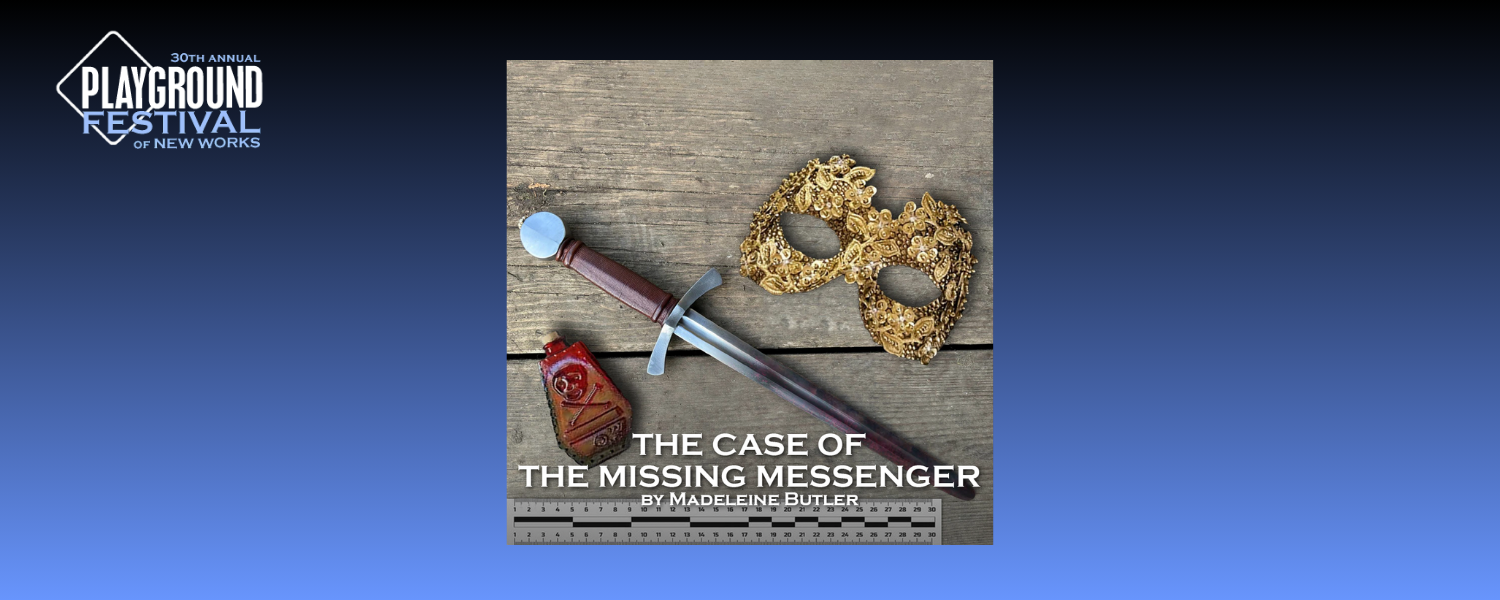
Welcome to the second installment of our Playwright Spotlight series – 2026 Festival of New Works! Today we’re featuring PlayGround-SF alum Madeleine Butler and her play The Case of the Missing Messenger, which will presented as a staged reading at Potrero Stage and Simulcast on May 24th at 3pm PT. Advance reservations are required: visit playground-sf.org/festival for details.
What was the seed of your play?
I wondered what would happen if the tomb at the end of Romeo and Juliet was treated like a crime scene — by detectives from a typical 1960s TV police procedural.
How did working with PlayGround impact the creation of this play?
The Case of the Missing Messenger was originally written for Monday Night PlayGround in response to the prompt “Shakespeare Sequels.” The wonderful thing about writing a ten-minute play for the Monday Night series is that the deadline pressure of writing something in four and a half days kicks the inner critic briskly to the curb. It’s very freeing. And then to be able to see the play on its feet with such superb actors and directors is exhilarating, inspiring, elucidating, and sometimes humbling. It’s astounding how fully realized the plays are with a mere 90 minutes of rehearsal and a very short tech.
Then, to my delight, the play was chosen for Best of PlayGround-SF (’26) last season, with Michael Barrett Austin reprising his role as Inspector Beppe Venerdi. I’d written the play originally with Michael’s voice in my head, and the casting director must have read my mind for the original Monday Night production, so it was wonderful to have him back. In the Best of PlayGround version, the same play (with a few minor cuts to the text) took on an entirely different aspect with Gabriel Grilli as the director and Ron Campbell as the third, role-tripling character. Gabriel has done a lot of devised work, among more conventional things, and Ron is a theatrical clown. So there was a frenzy of “business” (stage action) that got added during rehearsals and it really made the production sing. I learned a lot about farce from working with them.
The play won the People’s Choice Award for Best of PlayGround, which meant that I received a commission to re-imagine the work as a full-length play, along with a slot in the Residency Program. This was my first commission and my first full-length play written with a deadline—both freeing and terrifying. My fellow Resident Playwrights jumped in with some very helpful problem-solving at a critical moment. Then there was e huge payoff with the table read that was provided as part of the commission. PlayGround supplies professional actors who read the parts as if they were performing them, and it’s an incredible opportunity to see where the play is working and where the playwright needs to do more work.
Especially with a play like mine, which is a farce, the pacing is critical; being able to hear the pulse speed up or slow down told me more than I ever could have determined from reading it myself. At the end we had a feedback session with the actors and some fellow PlayGround playwrights who came to the reading as well, which was supportive and very, very helpful. I have an enormous respect for actors and the insights they have about what does or doesn’t play well dramatically, and it’s a rare opportunity to be able to get feedback from them. I’ve been making multiple iterations of the script since then with everyone’s comments in mind.
Now, for the staged reading, I’m looking forward to an extended rehearsal process (8 hours, which feels luxurious!), with a new director and an expanded cast that mixes two returning actors (Michael and Ron) with some equally talented actors that are new to this play. One of the exciting things about being a playwright is knowing that each time the play is staged, a new work of art is born, with my words and story being interpreted through the imaginations and talents of directors and actors, the creative staff (scenery and sound and costumes and props and lighting), stage managers, and the promotion experts who help get people in the seats so that we can all have a good time together. PlayGround provides all of that, so I can focus on getting the words right.
I joined the company in 2013 through Monday Night PlayGround, and I honestly can’t imagine how I could have become a playwright without PlayGround’s support.
Give a teaser for your play.
Bringing the anachronistic investigative techniques of 20th century TV police dramas to 14th century Verona, a police detective and his eager sidekick will stop at nothing to uncover the true story behind the deaths of Romeo and Juliet.
What is your hometown? Where do you live now? How have these places influences your writing?
I grew up in Lancaster, Pennsylvania — Amish country, although I’m not Amish. Now I live in Oakland, CA. One of the things both cities have in common is a creative combination of disparate cultures.
What is a song that represents your play?
“Just Like Romeo and Juliet” – the 1964 hit by The Reflections
What is a piece of art that represents your play?
Prokofiev’s Romeo and Juliet, in anyone’s choreography. The music captures the intensity and pathos of the love story without compromising the anger of the politics.
What do you do creatively other than writing?
I’m a life coach, which is more creative than it sounds. I also cook with wild abandon.
What artists (theatre or non-theatre) inspire you or your play?
Christopher Guest, who pushes a serious form (documentary) into the realm of the ridiculous.
What was the MNP prompt that started you on the journey of this play? If you hadn’t written this play, what is the play you would have written for this that prompt?
“Shakespeare Sequels.” As for other ideas, I’m lucky to get one.
Describe where you were when you wrote this play? Is there anything you need with you in order to write productively?
At my work table looking out over several trees, complete with squirrels, hummingbirds, and a handsome couple of crows. Looking out the window frequently helps keep my brain from frying.
Give us an out of context spoiler for your play.
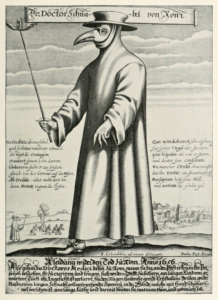
Never underestimate the power of the plague.
Madeleine Butler has had various plays staged for Monday Night PlayGround, including A Beautiful Evening, The Story of Our Lives (People’s Choice Award), The River God (Best of PlayGround 2016), The Last Pirogue, Beshert, Stuck, The Case of the Missing Messenger (Best of PlayGround 2025), and Favorite Things. Her short plays have also been staged by Playwright’s Center of San Francisco, FABUM (Washington, D.C.), Drama with Friends, and 3 Girls Theatre, including an episode of a collaborative serial radio drama. She regularly attended the Kennedy Center Playwriting Intensive and studies playwriting on an ongoing basis with Anthony Clarvoe.
Our annual Festival of New Works, now in its 30th year, features performances of our top Monday Night plays through Best of PlayGround, a full-length premiere, a series of Staged Readings, and the finalists of our Young Playwrights Project.